
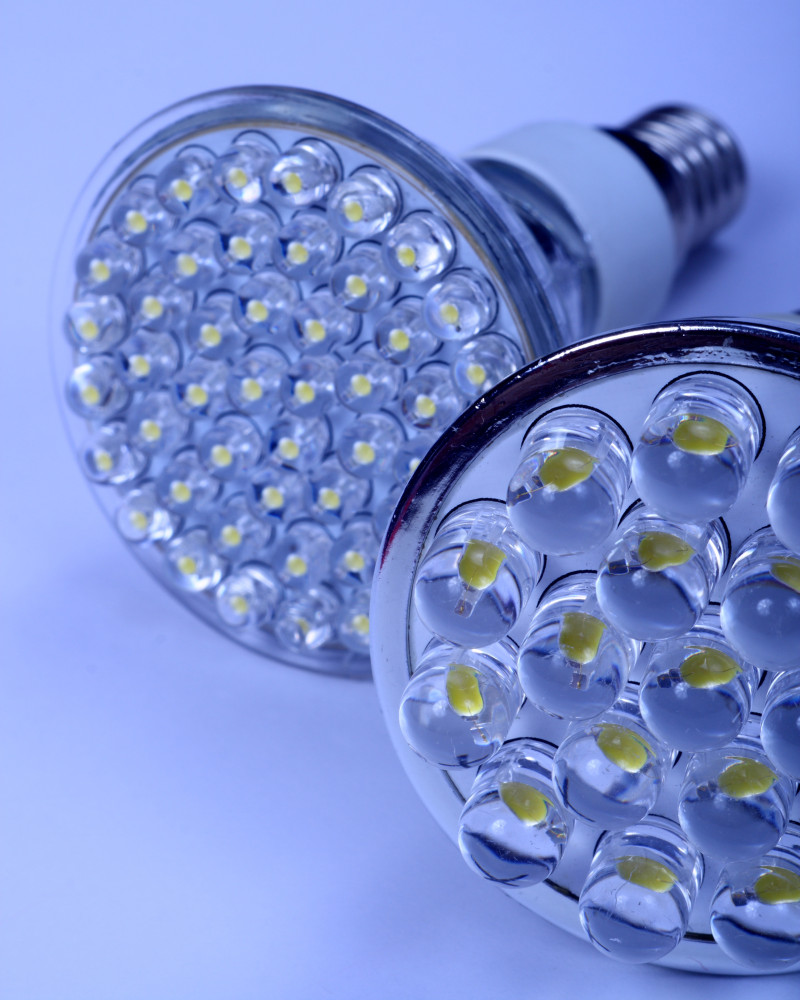
Today, we are no longer beholden to the old-fashioned incandescent bulb and the slow-lighting compact fluorescent bulb. LEDs (light-emitting diodes) provide us with light that is as bright as conventional lighting. More importantly, LEDs last longer and use less energy than their counterparts. Winstar’s management shares a brief tutorial on how these bright little lights work.
An LED is a tiny device illuminated by electrons within a semiconductor. When a current flows through a diode, the movement of electrons causes energy to be released in the form of photons, which produce light.
The color of light generated by the diode depends on the materials used. For instance, a standard silicone diode produces a very low photon frequency. It is invisible to the human eye. These infrared LEDs are used in products such as remote control devices and intruder alarms.
The LEDs we can see have varying wavelengths, which allows for a variety of colors. For instance, red LEDs produce a wavelength which is 630 to 660 nanometers. Blue LEDs produce a shorter wavelength, at 430 to 500 nanometers. At Winstar, we have the ability to produce any color you need.
Why are LEDs so popular? Given the advances in technology, LEDs can be manufactured to suit a variety of applications. They are economical to produce. Also, they don’t have delicate filaments or materials that wear out, so LEDs last for a long time. Their low power requirements make them energy efficient, while their small size makes them ideal for today’s compact electronics.
Today, LED is an ideal solution for most lighting needs. At Winstar, we have the expertise to help you design an advanced LED-based system with a small carbon footprint.